Opening a Tax-Free Savings Account (TFSA) for your child is one of the most powerful "head starts" you can give them. It leverages the two greatest forces in finance: time and tax-free compounding.
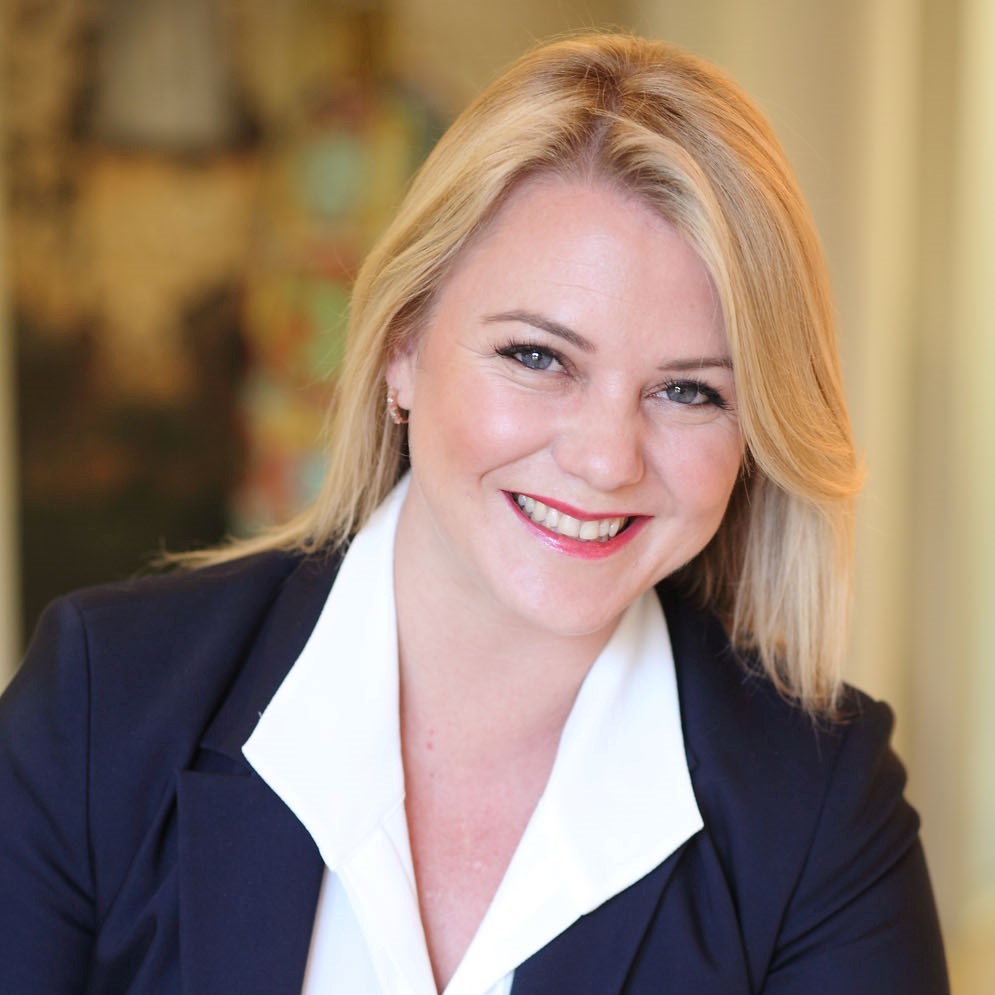
Article by: Kirsty Jacobs, Client Director - Retail at Prescient Investment Management


As of the 2026 National Budget, the annual contribution limit has been increased to R46,000, while the lifetime limit remains at R500,000.
How it Creates Financial Freedom
The "how" is found in the mechanics of the account. Unlike a standard savings account where the government takes a slice of your growth, a TFSA is a "closed loop" where every cent stays yours.
- Zero Tax on Growth: Your child will never pay Capital Gains Tax (CGT) on the growth, tax on dividends, or tax on interest earned within the account.
- Compound Interest on Steroids: In a taxable account, you lose a portion of your returns to tax every year, which slows down the "snowball effect." In a TFSA, that "tax money" remains in the account to earn even more interest the following year.
- Total Accessibility: While designed for the long term, the money is not locked away like a Retirement Annuity. If your child needs it for a life-changing opportunity (like starting a business or a deposit on a home), it is available.
Why it is a Game-Changer (The "Snowball" Effect)
The real magic happens because a child has a 50- to 60-year investment horizon. If you maximize their contributions early, you can hit their R500,000 lifetime limit by the time they are roughly 11 or 12 years old.

Critical Rules to Remember
To ensure this creates freedom rather than a headache, keep these three rules in mind:
- Don’t Over-Contribute: SARS is strict. If you exceed the R46,000 annual limit, they will tax the excess at 40%.
- Avoid "Atmosphere" Withdrawals: If you withdraw R10,000 to pay for a school trip, you cannot put that R10,000 back in later. It is gone from their lifetime limit forever. Think of it as a "one-way door."
- The "21st Birthday" Risk: Legally, the account belongs to the child. When they turn 18 (or 21, depending on the platform), they gain full control. Financial freedom only works if they have the financial literacy not to spend it all on a flashy car the moment they get access!
Evidence in Numbers
The effect of time and tax-free compounding on your child’s tax-free savings account is best demonstrated through a simple estimation of value through time. To calculate this, we need to factor in the specific contribution rules for a South African TFSA as of March 2026 and the historical performance of the MSCI World Index.
The Assumptions
- Annual Contribution: R46,000 (the current limit).
- Lifetime Limit: R500,000. At R46k/year, you will hit this limit in your child's 11th year.
- Growth Rate: The MSCI World Index has historically returned about 8% to 10% in USD. However, for a South African investor, we must account for the Rand's depreciation (ZAR/USD). Historically, the Rand has depreciated against the Dollar by roughly 3% to 4% annually over the long term.
- Estimated ZAR Return: We will use a conservative 12% annual return in Rand terms (8% USD growth + 4% currency tailwind).
The Calculation Phase
Phase 1: The Contribution Years (Birth to Age 11).
During these years, you are actively "filling the bucket."
- Total Contributed: R500,000.
- Growth during this period: Because the market compounds as you add money, the account value by age 11 wouldn't just be R500k; with 12% growth, it would be approximately R1.1 Million.
Phase 2: The "Hands-Off" Years (Age 12 to 65)
This is where the magic happens. You stop contributing (as the lifetime limit is reached), and the R1.1 million sits in the MSCI World Index for 54 years untouched.
Where the calculation is based on:
- * Present value = R1,100,000 (starting amount)
- * return = 12% (0.12)
- * number of years = 54 years

Important Reality Check
While R495 Million looks like a typo, it is the raw power of compounding over six decades. However, there are two "silent" factors to keep in mind:
- Inflation: R495 million in the year 2091 (when your child turns 65) will not buy what it buys today. If we assume a 5% inflation rate, that R495m might feel more like R25 million to R30 million in today's purchasing power. Still, that is a massive, tax-free retirement nest egg.
- Platform Fees: Using a low-cost provider is vital. A 1% difference in fees over 65 years can eat up nearly half of the final total.
Summary
By "filling the bucket" in the first 11 years of your child’s life, you aren't just giving them a savings account; you are effectively pre-funding their entire retirement. They can choose any career they love, knowing that their "65-year-old self" is already a multi-millionaire.
Disclaimer:
Prescient Investment Management (Pty) Ltd is a licenced Financial Service Provider (FSP 612). The information, opinions and illustrative information, are expressed in good faith and not intended as investment advice. All information provided is of a general nature with no regard to the specific investment objectives, financial situation or particular needs of any person. It is recommended that you first obtain appropriate legal, tax, investment or other professional advice prior to acting upon such information. Prescient Investment Management does not in any way guarantee the illustrated benefits shown. Prescient Investment Management offers these illustrations in order to assist you with understanding your financial planning. The calculations, illustrations and all information provided is of a general nature with no regard to the specific investment objectives, financial situation or needs of any investor or illustrations contained herein.
The information contained herein is provided for general information purposes only. The information and does not constitute or form part of any offer to issue or sell or any solicitation of any offer to subscribe for or purchase any particular investments. Opinions and views expressed in this document may be changed without notice at any time after publication and are, unless otherwise stated, those of the author and all rights are reserved. The information contained herein may contain proprietary information. The content of any document released or posted by Prescient is for information purposes only and is protected by copy right laws. We therefore disclaim any liability for any loss, liability, damage (whether direct or consequential) or expense of any nature whatsoever which may be suffered as a result of or which may be attributable directly or indirectly to the use of or reliance upon the information.For more information, visit www.prescient.co.za.